%20scale(0.008000%20-0.008000)'%3e%3cpath%20d='M74%20714H250L447%20155H449L641%20714H815V0H696V551H694L496%200H393L195%20551H193V0H74Z'/%3e%3c/g%3e%3cg%20transform='translate(114.2240%2035.7)%20scale(0.008000%20-0.008000)'%3e%3cpath%20d='M76%20714H372Q454%20714%20514.0%20686.0Q574%20658%20612.0%20609.5Q650%20561%20668.5%20496.0Q687%20431%20687%20357Q687%20283%20668.5%20218.0Q650%20153%20612.0%20104.5Q574%2056%20514.0%2028.0Q454%200%20372%200H76ZM201%20102H324Q397%20102%20443.5%20121.5Q490%20141%20516.5%20175.5Q543%20210%20552.5%20256.5Q562%20303%20562%20357Q562%20411%20552.5%20457.5Q543%20504%20516.5%20538.5Q490%20573%20443.5%20592.5Q397%20612%20324%20612H201Z'/%3e%3c/g%3e%3c/g%3e%3c/svg%3e)

Key takeaways
- Oral glutathione mainly causes mild, temporary digestive upset like gas and loose stools.
- Injectable and IV forms mainly cause injection-site reactions and, rarely, allergic reactions.
- Serious risks like liver dysfunction and anaphylaxis are linked to high-dose, unregulated IV use.
- Glutathione safety during pregnancy hasn't been well studied, so caution and physician guidance matter.
01
Glutathione side effects at a glance (by form)
| Form | What to expect |
|---|---|
| Oral (pills/capsules) | Mild, transient GI: gas, loose stools, bloating, cramping. Usually self-resolving. |
| Injection (subcutaneous) | Injection-site redness/soreness; occasional flushing, headache, nausea. |
| IV | Same as injection, plus a higher (still uncommon) risk of allergic reaction; serious events are tied to high, unregulated dosing. |
| Topical (creams/lotions) | Generally very mild — occasional local redness. |
| Call your doctor | Trouble breathing/wheezing, facial or throat swelling, hives, racing heart — signs of an allergic reaction. |
02
Why the form changes everything
Glutathione is a small molecule your body makes naturally, but how you take it changes both how much reaches your bloodstream (bioavailability) and what side effects you'll notice. Oral glutathione is largely processed through your gut — which is why its side effects are digestive. Injectable and IV forms go straight into the body, so they skip the GI issues but introduce injection-related and systemic-reaction risks instead. Understanding that split is the whole game: most "glutathione side effects" articles lump everything together, but a capsule and an IV drip are genuinely different risk profiles.
03
Oral glutathione side effects
For oral glutathione and L-glutathione supplements, the side effects are mild and centered on digestion. A 2025 safety review found that at typical supplement doses (around 500 mg/day over several weeks), gastrointestinal symptoms like flatulence and loose stools were the most common effects — and they were transient, usually resolving on their own (Alzahrani et al., 2025). You may also see:
- Bloating or abdominal cramping
- Mild nausea
- Occasional tingling (infrequent, transient)
The bigger limitation of oral glutathione isn't side effects — it's absorption. Much of a swallowed dose is broken down before it does much, which is why some people move to injectable forms for a more reliable effect.
04
Injectable, IV, and infusion glutathione side effects
IV glutathione is delivered as an infusion — sometimes called a “glutathione drip” — so “IV glutathione side effects” and “glutathione infusion side effects” describe the same thing, and everything covered here applies to both.
Because injection and IV infusion bypass the gut, they trade the digestive complaints for a different set:
- Injection-site reactions — redness, soreness, or mild swelling where you inject or where the infusion line sits (the most common effect of any injectable).
- Flushing or warmth, a brief headache, or mild nausea — especially if an infusion is run too quickly (slowing the infusion usually helps).
- Lightheadedness during or shortly after an infusion.
These are usually mild, and they are the same whether the dose arrives as a single injection or as an infusion. The reactions that matter more are the allergic ones, covered next.
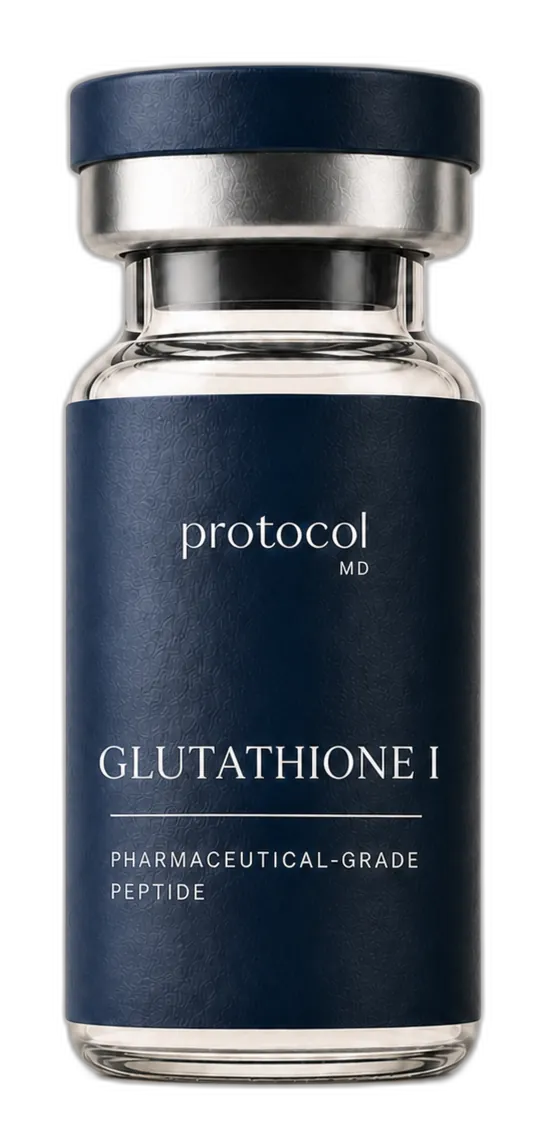
Source matters as much as route for injectables. In 2019 the FDA reported eight patients who developed nausea, vomiting, chills, fever and, in two cases, hospital-level reactions after intravenous glutathione compounded from a dietary-supplement-grade ingredient that FDA testing found contained excessive bacterial endotoxin (FDA, 2019). The FDA's point was that supplement-grade glutathione should not be used to compound sterile injectables. Those reactions came from contamination, not from glutathione itself, which is why pharmaceutical-grade sourcing is a safety question rather than a marketing one.
05
Serious side effects — when to call your doctor
Serious reactions to glutathione are uncommon, but you need to know the signs, because they're mostly allergic and can escalate:
- Allergic reaction — hives or rash, itching, swelling of the face, lips, tongue, or throat, and especially trouble breathing or wheezing (bronchial constriction). This is a medical emergency — seek care immediately.
- Racing heart, fever, or swollen lymph nodes alongside the above.
- Anaphylaxis — rare, but documented with IV glutathione.
Here's the honest data point: in a review of higher-dose IV glutathione (1,200 mg twice weekly for six weeks), about a third of participants experienced adverse events, including liver dysfunction and one case of anaphylaxis (Alzahrani et al., 2025). That's not a reason to fear glutathione — it's a reason to care a lot about dose and supervision, which is the theme of this whole article.
06
The skin-lightening safety issue you should know about
A lot of glutathione's popularity comes from the skin-lightening market, and this is exactly where the serious safety signals concentrate. High-dose IV glutathione promoted for skin whitening has drawn formal safety warnings from regulators — the same review notes liver damage and severe allergic reactions among the concerns, and flags the absence of any standardized dosing as the core problem (Alzahrani et al., 2025).
To be clear: that's a warning about unregulated, high-dose, cosmetic use — not physician-supervised glutathione at appropriate doses. We don't make skin-lightening claims, and you should be skeptical of anyone who does while pushing megadose IVs. The compound isn't the danger; the unregulated dosing is.
07
Is glutathione bad for your liver?
This one's nuanced. Glutathione is central to how your liver handles oxidative stress and detoxification — it's one of the body's key protective molecules, which is why "glutathione for liver detox" is a common search. So in that sense it's liver-supportive. The caveat is the one above: high-dose unregulated IV use has been associated with liver dysfunction in the safety literature. Appropriate, supervised dosing is a completely different situation from a megadose whitening drip. If you have existing liver disease, that's a conversation to have with your physician before starting anything.
08
Is glutathione safe during pregnancy?
Short answer: it hasn't been well studied in pregnancy, so the honest guidance is caution. There isn't good data on how supplemental glutathione affects pregnancy or a developing fetus, so anyone pregnant or breastfeeding should not start it without a physician's guidance. When the evidence is thin, "wait and ask" is the right call.
09
Does the form change your risk? (the summary that matters)
Yes — more than the molecule itself:
- Oral — safest and mildest side-effect profile (some GI upset), but the least reliably absorbed.
- Injection — injection-site reactions plus occasional mild systemic effects; more direct than oral.
- IV — most direct, and where the rare-but-serious allergic and dosing-related risks live; this is the form that needs medical supervision and sensible dosing.
The through-line: the more direct and higher-dose the form, the more the "who's dosing this and supervising it" question matters.
10
How to reduce your chances of side effects
- Match the form to the goal — and don't megadose. The serious events cluster around high, unregulated IV doses. Appropriate dosing is the single biggest safety lever, which is why we don't publish dosing charts on a blog.
- Use a legitimate, physician-supervised source. A prescriber setting your dose and monitoring you is the difference between the safe end of the range and the regulatory-warning end.
- Nail injection technique (if injecting) — rotate sites, sterile needle each time, let alcohol dry.
- Go slow on IVs — most flushing/headache comes from pushing an infusion too fast.
- Report anything allergic immediately — breathing changes, swelling, or hives are never "wait and see."
11
What actually affects your risk
Three things move the needle far more than glutathione itself:
- Dose and form. Side effects and serious events scale with dose, and IV megadosing is where the danger is. A prescriber setting an appropriate dose is your biggest protection.
- Where it came from. A gray-market vial of unknown purity and concentration — common in the cosmetic-whitening space — is a genuinely different risk than pharmaceutical-grade, pharmacy-compounded glutathione.
- Your individual profile. Liver conditions, pregnancy, allergies, and other medications all matter, which is what a proper intake evaluation is for.
12
How Protocol MD approaches glutathione safety
Protocol MD's glutathione is physician-prescribed and pharmaceutical-grade — evaluated and prescribed by a licensed physician, compounded by a licensed 503A pharmacy, and dosed appropriately for legitimate use, not cosmetic megadosing. That means a real evaluation up front, a dose set by a prescriber, and someone accountable if a side effect shows up — the safeguards that keep glutathione on the well-tolerated end of the spectrum. Protocol MD sells glutathione injections, so weigh this section with that commercial interest in mind; compounded glutathione is not an FDA-approved drug, and Protocol MD does not offer it for skin lightening. See how Protocol MD's physician-prescribed glutathione works, or read our complete glutathione guide for the full picture.
13
The bottom line
Glutathione side effects are, for most people, mild and depend heavily on the form: oral means occasional digestive upset, injectable and IV mean injection-site reactions and a small risk of allergic reaction. The serious safety concerns in the literature — liver dysfunction, anaphylaxis — cluster around high-dose, unregulated IV use, especially in the cosmetic skin-lightening market, not appropriately dosed, physician-supervised therapy. Handle the dose and the source responsibly, inside a real medical relationship, and you've addressed the part that actually determines your risk.
Which form you take is what shifts the risk, so bring your history and current medications to a physician before starting glutathione in any form.
FAQ
Frequently Asked Questions
What is the most common side effect of glutathione?
For oral glutathione, mild, temporary digestive upset (gas, loose stools, bloating) is most common. For injectable and IV forms, injection-site reactions and occasional flushing are the most common. Most effects are mild and short-lived.
Are glutathione injections safe?
For most people, physician-supervised glutathione injections at appropriate doses are well tolerated — injection-site reactions are the usual complaint. The serious risks (allergic reactions, liver effects) are associated mainly with high-dose, unregulated IV use, which is why medical supervision and sensible dosing matter.
Do IV and oral glutathione have different side effects?
Yes. Oral's side effects are digestive (it's processed through the gut). IV bypasses the gut, so it avoids most GI upset but carries a higher, still-uncommon risk of allergic reactions — and serious events are tied to high, unregulated IV dosing.
What are the side effects of a glutathione infusion?
A glutathione infusion is IV glutathione, so the side effects are the same: most people tolerate it well, with the most common issues being injection-site reactions like bruising or irritation and, rarely, more serious allergic reactions. Because an infusion bypasses digestion and enters the bloodstream directly, it should be administered under medical supervision. See the IV section above for the full breakdown.
Is glutathione good or bad for your liver?
Glutathione is central to the liver's own detox and antioxidant defenses, so at appropriate doses it's liver-supportive. High-dose, unregulated IV use, however, has been linked to liver dysfunction — another reason dose and supervision matter. Anyone with liver disease should be evaluated first.
Is glutathione safe during pregnancy?
It hasn't been well studied in pregnancy, so the cautious, honest answer is not to start it while pregnant or breastfeeding without a physician's guidance.
How long do glutathione side effects last?
The common ones (GI upset for oral; injection-site reactions for injectable) are typically mild and resolve on their own within a day or so. Anything allergic — breathing changes, swelling, hives — is not something to wait out; seek care.
Citations & Sources
- Alzahrani TF, et al. Exploring the Safety and Efficacy of Glutathione Supplementation for Skin Lightening: A Narrative Review. Cureus. 2025;17(1):e78045. PMID 40013212. https://pmc.ncbi.nlm.nih.gov/articles/PMC11862975/
- WebMD. Glutathione — uses, side effects, and more. https://www.webmd.com/vitamins-supplements/glutathione
- U.S. Food and Drug Administration. FDA highlights concerns with using dietary ingredient glutathione to compound sterile injectables. 2019. https://www.fda.gov/drugs/human-drug-compounding/fda-highlights-concerns-using-dietary-ingredient-glutathione-compound-sterile-injectables
Educational only — this article does not diagnose, prevent, treat, or cure any condition, and it is not medical advice. Glutathione therapy is available by prescription following evaluation by a licensed physician; compounded glutathione is not FDA-approved, and individual results and side effects vary. Protocol MD sells physician-prescribed glutathione injections and has a commercial interest in this topic. Always speak with your physician about side effects and before starting or stopping any therapy.
Published July 11, 2026. Last updated October 3, 2026.