01
How Long Does It Take to Lose Weight for a Wedding?
The time it takes to lose weight for a wedding depends on several factors: your starting point, diet, exercise, and whether you're using tools like GLP-1 medications. The more time you have, the more options are available — but there's always a meaningful step no matter where you are.
- 6+ months out: Ideal. You have time to find what works for your body, adjust if something isn't working, and avoid the panic that drives bad decisions.
- 3–4 months out: Still plenty of time. Most programs — including medical options — show visible results in 8–12 weeks when followed consistently.
- 6–8 weeks out: Limited window. Focus on reducing bloat, improving sleep, and dialing in nutrition. Crash dieting now will hurt more than help.
- Under 4 weeks out: The goal shifts to feeling your best. Hydration, sleep, and reducing inflammation are what matter most.
One practical note for any wedding weight loss plan: most seamstresses finalize alterations 6–8 weeks before the wedding. Whether GLP-1 medications make sense depends on your timing, goals, and health history — a licensed provider can evaluate that before you start.
02
Why the Wedding Crash Diet Backfires
The wedding crash diet backfires because your body treats extreme restriction as a starvation signal — not a fat-burning command. What actually works is a moderate deficit, consistent exercise, and for some brides, GLP-1 medications. Here's what happens when you ignore that and try to lose weight fast for your wedding by cutting hard:
- Muscle loss, not just fat loss. When you dramatically restrict calories, your body burns muscle alongside fat. Less muscle means a slower metabolism — so the same calorie intake that used to maintain your weight now causes you to gain it back.
- Metabolic adaptation. Your body responds to starvation-level intake by lowering your resting metabolic rate. You'll feel exhausted, cold, and foggy — not ideal for the months before your wedding.
- The rebound. Most crash dieters regain the weight within months to a few years. In a wedding context, the dress may not fit by the rehearsal dinner.
- Inflammation and water retention. Ironically, severe restriction raises cortisol, which increases water retention — making you look and feel puffier, not leaner.
A moderate deficit of 300–500 calories per day is consistent with established dietary guidelines for gradual fat loss — roughly 0.5–1 lb per week, with muscle preserved and metabolism intact. (CDC: Losing Weight) GLP-1 medications can be added on top of this to make that deficit easier by reducing appetite, but they work alongside diet and exercise — not instead of them.
03
A Bridal Diet That Actually Works
Most wedding diets fail because they're built around restriction. The wedding diet plan that actually works builds around protein, a moderate deficit, and for some brides, GLP-1 medications. Aim for 0.7–1g of protein per pound of body weight. Randomized trials find that higher protein intake during a calorie deficit reduces lean mass loss and improves satiety. (Leidy et al., Am J Clin Nutr, 2007)
A practical wedding diet framework:
- Protein at every meal: eggs, Greek yogurt, chicken, fish, cottage cheese, legumes. Aim for 25–40g per meal.
- Vegetables as volume: non-starchy vegetables let you eat large quantities with low calorie impact and reduce bloat through fiber.
- Limit the three hidden calorie sources: liquid calories (alcohol, juice, fancy coffee), restaurant portion sizes, and boredom snacking.
- Don't eliminate carbs entirely. Complex carbs (oats, sweet potato, brown rice) fuel your workouts and regulate cortisol. Cutting them entirely raises stress hormones and can worsen water retention and mood.
Diet is the foundation. GLP-1 medications reduce appetite and make dieting easier, but what you eat still determines body composition. They work better alongside a solid diet than without one.
04
How to Exercise to Lose Weight for Your Wedding
Strength training is the most important tool for losing weight for your wedding — especially if you're on GLP-1 medications. The best wedding workout plan pairs lifting with cardio to preserve muscle and burn fat at the same time. Both together is how to get in shape for your wedding without overtraining.
Strength training 3× per week is the minimum effective dose for preserving lean mass during a deficit. Compound movements — squats, deadlifts, rows, presses — recruit the most muscle. Even bodyweight-only training (push-ups, lunges, glute bridges) produces results when done consistently.
Cardio adds to the deficit without requiring you to eat less. Federal physical activity guidelines recommend 150–300 minutes per week of moderate-intensity aerobic activity for meaningful health benefit. (HHS Physical Activity Guidelines, 2nd Ed.) Walking is underrated: 30 minutes after dinner consistently reduces blood sugar spikes and improves sleep quality.
Strength training matters even more for brides using GLP-1 medications. GLP-1s create a significant calorie deficit through appetite reduction — without resistance training, a meaningful share of the weight lost comes from muscle rather than fat. (Review: lean mass and GLP-1 medications) Lifting is what protects muscle mass and keeps metabolism intact.
What to avoid:
- Chronic overtraining in the last 4 weeks — elevated cortisol from excessive exercise worsens water retention and raises injury risk.
- Starting a brand-new intense program in the last 6 weeks — soreness and adaptation can make you look and feel worse short-term.
Consistency beats any program you can't sustain. For brides on GLP-1 medications, lifting is the non-negotiable — it's what keeps more of the loss coming from fat rather than muscle.
05
The Wedding Stress Problem Nobody Talks About
Wedding planning is one of the most reliably stressful experiences most people go through — and that wedding stress sabotages weight loss directly, even for brides on GLP-1 medications. The answer most people never get when they ask why they can't lose weight before their wedding: it's cortisol. Long-term elevated cortisol is strongly associated with abdominal fat storage. (Incollingo Rodriguez et al., Curr Obes Rep, 2018)
When cortisol is chronically elevated:
- Your body preferentially stores fat in the abdominal region.
- Hunger increases, particularly cravings for calorie-dense, high-sugar foods.
- Sleep quality drops, which further raises cortisol and reduces the satiety hormone leptin.
- Water retention increases, masking fat loss on the scale.
This is why two brides following the same diet to lose weight for their wedding see different results. The one under more wedding stress often sees slower scale movement — not because the diet isn't working, but because the hormonal environment is working against her.
How to lose weight before your wedding without letting stress undo it — practical strategies with evidence:
- Sleep 7–9 hours. Sleep deprivation raises ghrelin (the hunger hormone) and cortisol. Nothing else in this guide matters as much.
- Delegate planning tasks. Use a coordinator or hand off specific logistics (hotel blocks, vendor follow-ups, shuttle timing) to a partner or family member. Decision fatigue is real and cumulative.
- Schedule recovery. One to two complete rest days per week from both exercise and planning — even 30 minutes of something with no decisions — measurably reduces cortisol.
Stress management isn't a soft add-on — it's load-bearing. For brides on GLP-1 medications, keeping cortisol in check is what lets the medication do its job.
06
Medical Weight Loss for Your Wedding
For some patients, medical weight loss for their wedding — specifically compounded GLP-1 medications — may be an appropriate option if a physician decides it's right for them. It works well alongside diet and exercise, and can help when you hit a plateau.
GLP-1 receptor agonists are a class of medications that work by mimicking a naturally occurring gut hormone. They regulate appetite, slow gastric emptying, and signal the brain that you're full. The result, in most people who respond to the medication, is a significantly reduced appetite without the willpower fight.
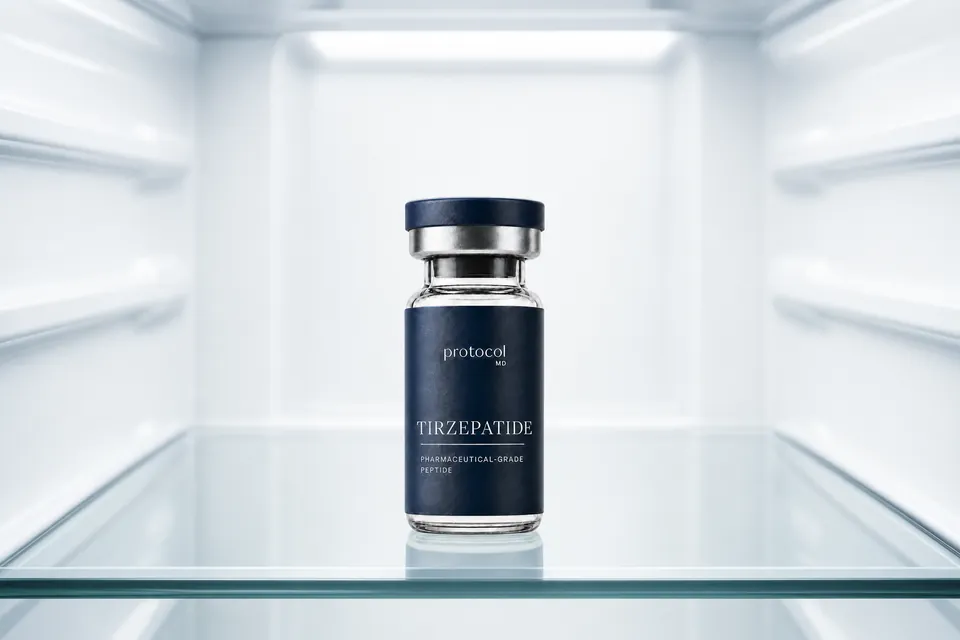
Protocol MD prescribes compounded semaglutide and compounded tirzepatide. Compounded medications are not FDA-approved and are not the same as Wegovy or Zepbound.
A few important points for anyone considering this path:
- Try to start as early as you can. Even if you're closer to the date, it may not be too late — but your goals, health history, and timeline must be evaluated by a licensed provider before starting anything.
- They require a prescription from a licensed provider. A telehealth provider will evaluate your health history, current medications, and goals before prescribing. Not everyone is a candidate.
- Common side effects include nausea, vomiting, diarrhea, and constipation. GLP-1 medications are not appropriate for anyone who is pregnant, breastfeeding, or trying to conceive; anyone with a personal or family history of medullary thyroid cancer or MEN2; or anyone with a history of pancreatitis. A physician reviews your full history before prescribing. (FDA: GLP-1 Safety Information)
- Privacy matters. Telehealth consultations are private medical appointments, conducted from wherever you are. Your information is protected under HIPAA.
- They work best alongside lifestyle foundations. Protein intake, strength training, and sleep quality all compound the results.
Protocol MD offers physician-prescribed compounded GLP-1 treatment online. You complete a health assessment, a US-licensed physician reviews it and decides whether treatment is appropriate, and your card is only charged if you're prescribed.
FAQ
Frequently Asked Questions
How much weight can you lose in 3 months before a wedding?
With a consistent 300–500 calorie daily deficit and strength training, most guidelines suggest roughly 0.5–1 lb of fat loss per week — putting 6–12 lbs within reach over 12 weeks. (CDC: Healthy Weight) Brides on GLP-1 medications may see faster results depending on their individual response. What matters more than the number is how you feel and how your dress fits.
What is the fastest way to lose weight for a wedding?
The fastest sustainable path is a moderate calorie deficit, high protein, strength training 3× per week, and quality sleep — and possibly GLP-1 medications. In the STEP-1 trial, adults on semaglutide plus lifestyle changes lost an average of 14.9% of body weight over 68 weeks, versus 2.4% with lifestyle changes alone — results vary, and a physician decides whether it's right for you. (Wilding et al., NEJM 2021) Extreme restriction backfires — muscle loss and metabolic adaptation undo the progress.
Is it too late to lose weight before my wedding?
It is never too late to try something. Dietary changes that reduce inflammation often show visible results sooner than actual weight loss. If you're considering GLP-1 medications, start the provider conversation immediately — it takes time to evaluate and start.
What should I avoid eating before my wedding?
Limit sodium, alcohol, and heavily processed foods in the 1–2 weeks before your wedding — they drive water retention and inflammation. Avoid any foods you know personally that cause bloating. Right before the wedding, the goal isn't weight loss. It's feeling your best.
Can you lose weight for a wedding without exercise?
Yes, but without strength training, more of the weight lost comes from muscle rather than fat — which matters for strength, metabolism, and long-term results. Even 20–30 minutes of lifting 3× per week makes a meaningful difference.
Is telehealth weight loss private?
Telehealth weight loss consultations are private medical appointments, and your information is protected under HIPAA. Protocol MD shares it only as needed to provide your care (for example with the prescribing physician and the pharmacy), to process payment, or as required by law.
Educational only — not medical advice. Compounded medications are not FDA-approved. Protocol MD sells compounded GLP-1 weight management support and has a commercial interest in this topic. Individual eligibility for any medication is determined by a licensed provider based on your history and clinical presentation. Results vary. Not available in all states. Consult a licensed physician before starting any weight management program.
Published October 21, 2026.