%20scale(0.008000%20-0.008000)'%3e%3cpath%20d='M74%20714H250L447%20155H449L641%20714H815V0H696V551H694L496%200H393L195%20551H193V0H74Z'/%3e%3c/g%3e%3cg%20transform='translate(114.2240%2035.7)%20scale(0.008000%20-0.008000)'%3e%3cpath%20d='M76%20714H372Q454%20714%20514.0%20686.0Q574%20658%20612.0%20609.5Q650%20561%20668.5%20496.0Q687%20431%20687%20357Q687%20283%20668.5%20218.0Q650%20153%20612.0%20104.5Q574%2056%20514.0%2028.0Q454%200%20372%200H76ZM201%20102H324Q397%20102%20443.5%20121.5Q490%20141%20516.5%20175.5Q543%20210%20552.5%20256.5Q562%20303%20562%20357Q562%20411%20552.5%20457.5Q543%20504%20516.5%20538.5Q490%20573%20443.5%20592.5Q397%20612%20324%20612H201Z'/%3e%3c/g%3e%3c/g%3e%3c/svg%3e)
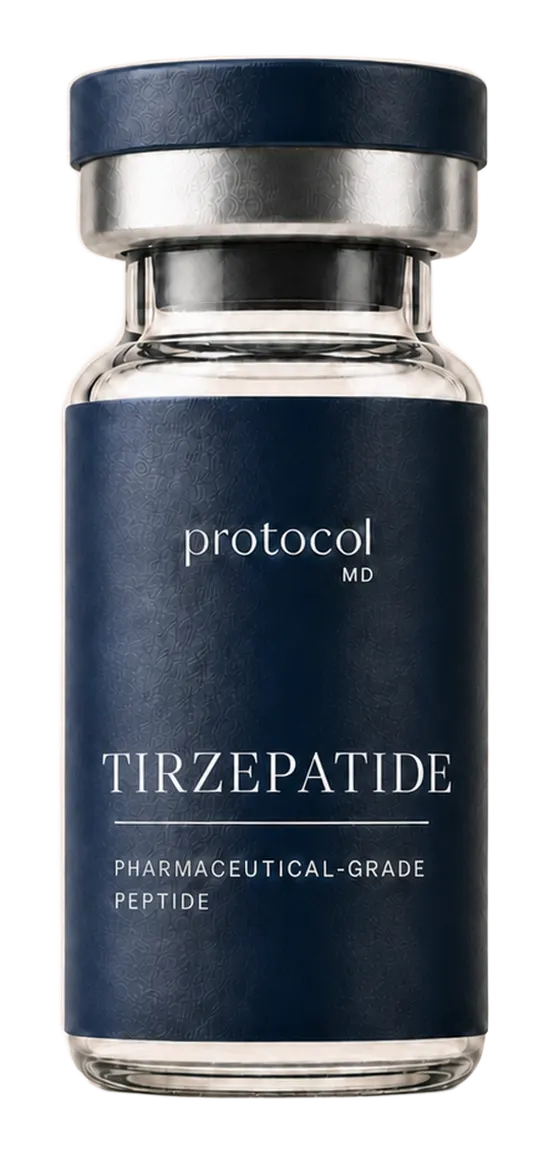
Compounded Tirzepatide Injections
Compounded tirzepatide is a once-weekly injection that acts on two receptors, GIP and GLP-1. It is physician-prescribed, prepared by a US-licensed 503A pharmacy, and available online through Protocol MD in all 50 states. A US-licensed physician reviews your intake and decides whether it is appropriate for you. Compounded medications are not FDA-approved and are not the same as the brand-name versions.
Starting at
$199/mo
Same price at every dose
Your dose may change over time. What you pay does not — no dose-based pricing, no upcharge when you move up.
- A US-licensed physician reviews your intake and decides if it’s right for you
- Async physician review within 24 hours
- Ships with everything you need to dose at home
- Subscription · cancel renewal anytime
Tirzepatide is a single molecule that acts on two receptors your body already uses after a meal: GIP (glucose-dependent insulinotropic polypeptide) and GLP-1 (glucagon-like peptide-1). Both are incretin hormones involved in appetite signalling, how quickly the stomach empties, and glucose-dependent insulin release.
It's prescribed as a once-weekly subcutaneous injection and used as part of a broader plan alongside nutrition and activity — not as a replacement for them.
What is compounded tirzepatide?
Tirzepatide is a once-weekly injection that acts on two receptors, GIP and GLP-1, both involved in appetite and blood-sugar signalling. Ours is prepared by a US-licensed 503A compounding pharmacy. Compounded medications are not FDA-approved, and a physician decides whether treatment is appropriate for you.
How much does it cost?
Protocol MD is cash-pay with no membership fee. Compounded tirzepatide is billed upfront for the term you choose: 12 months is $2,388 ($199 a month), 6 months is $1,374 ($229 a month), and 3 months is $768 ($256 a month). Your price is the same at every dose. We place a hold for the term at checkout and charge it only if a physician prescribes — if they decide it isn't right for you, the hold is released and you're never charged. Plans renew automatically at the end of the term unless you cancel. Cancelling stops future renewals; it does not refund a term already paid for. Renewal terms are shown before you pay.
How is tirzepatide different from semaglutide?
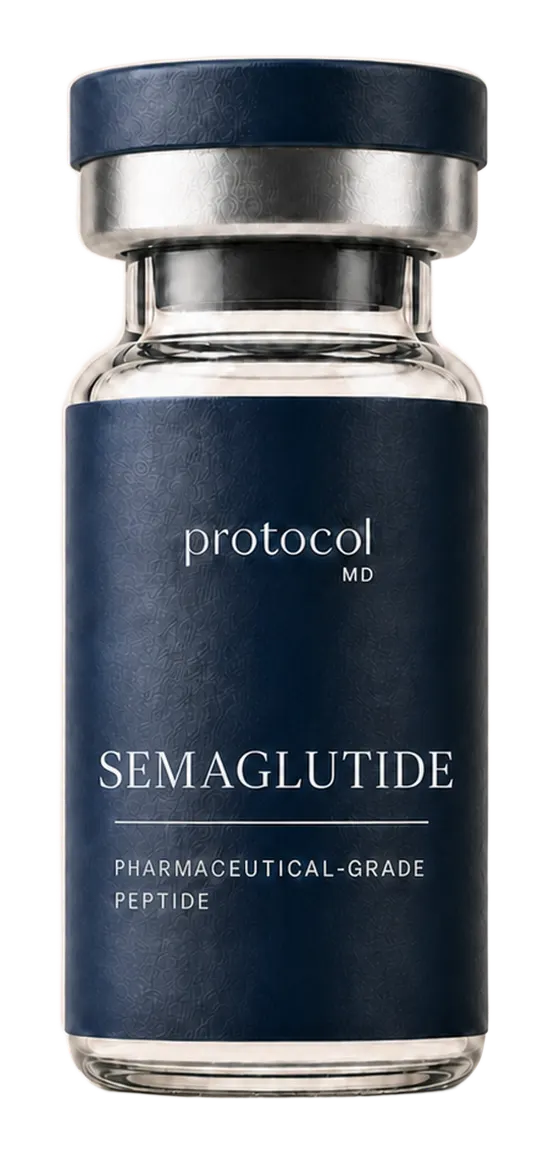
Semaglutide acts on one receptor (GLP-1); tirzepatide acts on two (GIP and GLP-1). Both are once-weekly injections with broadly similar, mostly gastrointestinal side effects. In a head-to-head clinical trial of the FDA-approved brand-name products, average weight loss was greater with tirzepatide. That trial did not study compounded medications, results vary from person to person, and which, if either, is appropriate for you is a physician's decision based on your health history. Compounded medications are not FDA-approved. See compounded semaglutide or read our full comparison.
How It Works
Physician-prescribed, in three simple steps.
Free assessment, 100% online
Answer a few questions about your health history, lifestyle, and goals through our secure online medical intake. It takes about five minutes.
Physician review & prescription
A US-licensed physician reviews your intake and prescribes Tirzepatide only if it's clinically appropriate for you. We place a hold on your card at checkout and charge it only if they prescribe.
Delivered to your door
If prescribed, your medication ships cold-chain and discreetly to your door, with continuous physician oversight and simple refills.
Overview
What Is Compounded Tirzepatide?
Tirzepatide is a single molecule that acts on two receptors your body already uses after a meal: GIP (glucose-dependent insulinotropic polypeptide) and GLP-1 (glucagon-like peptide-1). Both are incretin hormones involved in appetite signalling, how quickly the stomach empties, and glucose-dependent insulin release.
It's prescribed as a once-weekly subcutaneous injection and used as part of a broader plan alongside nutrition and activity — not as a replacement for them.
Protocol MD's tirzepatide is compounded by a US-licensed 503A pharmacy. Compounded medications are not FDA-approved, and a US-licensed physician decides whether this treatment is appropriate for you.
Weighing your options? See compounded semaglutide, a single-receptor GLP-1, or read our semaglutide vs tirzepatide comparison. A physician decides which, if either, is appropriate for you.
If you want to understand your starting point, our free BMI calculator and calorie calculator can help you see where you are today — they're educational tools, and a physician, not a calculator, decides whether treatment is appropriate for you.
Who It's For
Who Compounded Tirzepatide May Be Considered For.
Physician-assessed Weight Management
Adults whose physician determines treatment is clinically appropriate after review.
Alongside Nutrition and Activity
Intended as part of a broader plan, not a standalone substitute for it.
People Who Want Oversight
Ongoing physician review rather than a one-time transaction.
Not for Everyone
Certain histories rule it out entirely — the intake screens for them before any charge.
How tirzepatide works
Two signals your gut already sends.
GIP and GLP-1 are incretin hormones your gut releases after a meal. Tirzepatide is a single molecule that acts on both receptors, and is built to persist for days rather than the few minutes the natural hormones survive.
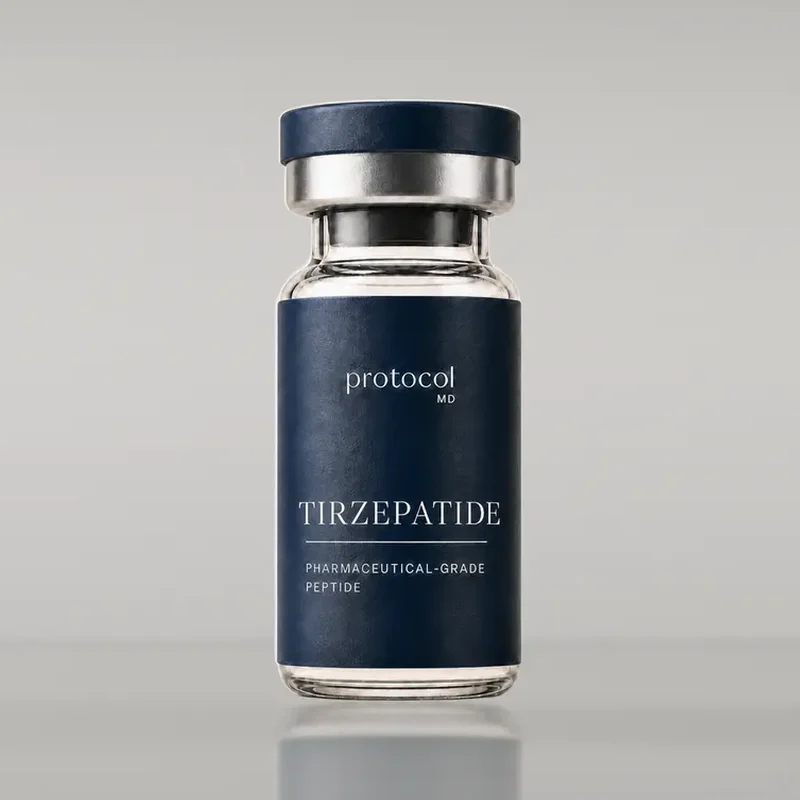
Acts on GIP and GLP-1 receptors
Two receptors your own incretin hormones use, found in the brain, gut, pancreas and fat tissue, where they are involved in appetite signalling and blood-sugar regulation.
Slows how fast the stomach empties
Food leaves the stomach more gradually. That is part of why fullness after a meal is commonly reported as lasting longer, though how much varies between people.
Given once a week
The molecule resists the enzyme that clears the natural hormones within minutes, so a single injection covers the week. A physician sets the schedule and adjusts it over time.
Why tirzepatide
Your own GLP-1 is gone in minutes.
Tirzepatide is built to last most of a week.
Your own GLP-1 breaks down almost immediately
GLP-1 is a hormone your gut releases after you eat. An enzyme called DPP-4 starts breaking it down straight away, so it survives only a couple of minutes in the blood. That is why the natural hormone cannot work as a medicine on its own.
Source: Deacon CF, Nauck MA, Toft-Nielsen M, Pridal L, Willms B, Holst JJ. Diabetes. 1995;44(9):1126-31.
One molecule, two receptors, built to survive
Tirzepatide is a single molecule designed to act on both the GIP and GLP-1 receptors. A fatty-acid chain lets it bind a blood protein that slows its clearance, giving it a half-life of about five days, which is what makes once-weekly dosing possible.
Source: Coskun T, Sloop KW, Loghin C, et al. Mol Metab. 2018;18:3-14.
Charts are illustrative representations of published research and of the known properties of a medication class or active ingredient. They may simplify or normalise study data for clarity, describe general biology rather than any individual's result, and are not a prediction or guarantee of an outcome. A reference to a study or mechanism does not establish that any specific medication, formulation or treatment plan produces the same result. Compounded medications are not FDA-approved and are not evaluated by the FDA for safety, quality or effectiveness.
FAQ
Common questions about Tirzepatide.
What is compounded tirzepatide?
Tirzepatide is a once-weekly injection that acts on two receptors, GIP and GLP-1, both involved in appetite and blood-sugar signalling. Ours is prepared by a US-licensed 503A compounding pharmacy. Compounded medications are not FDA-approved, and a physician decides whether treatment is appropriate for you.
How much does it cost?
Protocol MD is cash-pay with no membership fee. Compounded tirzepatide is billed upfront for the term you choose: 12 months is $2,388 ($199 a month), 6 months is $1,374 ($229 a month), and 3 months is $768 ($256 a month). Your price is the same at every dose. We place a hold for the term at checkout and charge it only if a physician prescribes — if they decide it isn't right for you, the hold is released and you're never charged. Plans renew automatically at the end of the term unless you cancel. Cancelling stops future renewals; it does not refund a term already paid for. Renewal terms are shown before you pay.
How is tirzepatide different from semaglutide?
Semaglutide acts on one receptor (GLP-1); tirzepatide acts on two (GIP and GLP-1). Both are once-weekly injections with broadly similar, mostly gastrointestinal side effects. In a head-to-head clinical trial of the FDA-approved brand-name products, average weight loss was greater with tirzepatide. That trial did not study compounded medications, results vary from person to person, and which, if either, is appropriate for you is a physician's decision based on your health history. Compounded medications are not FDA-approved. See compounded semaglutide or read our full comparison.
Is compounded tirzepatide the same as the brand-name medication?
No. Compounded medications are prepared by a licensed compounding pharmacy and are not FDA-approved — the FDA has not evaluated them for safety or effectiveness. They are not generic equivalents of, or substitutes for, any brand-name product. Your physician can discuss the difference and whether compounded treatment is appropriate for you.
What are the common side effects?
Gastrointestinal effects are the most commonly reported — nausea, vomiting, diarrhea, and constipation. They're a major reason treatment starts low and escalates gradually. Report any side effects to your physician, and seek medical attention for severe or persistent symptoms such as intense abdominal pain.
How is compounded tirzepatide prescribed through Protocol MD?
You complete a short online intake, and a US-licensed physician (MD or DO) reviews your history and goals to decide whether compounded tirzepatide is appropriate — a physician makes the call, never an algorithm. We place a hold on your card at checkout, and if they decide it isn't right for you, the hold is released and you're never charged.
Do I need insurance?
No insurance is required — Protocol MD is cash-pay and transparently priced, with no surprise fees. HSA and FSA debit cards are accepted at checkout, and every charge has an itemized receipt in your patient portal for reimbursement. Physician-prescribed medication is generally an eligible expense, but plans vary, so check with your plan administrator.
Ready to start?
Buy Compounded Tirzepatide Injections online, physician-prescribed.
Complete your medical intake. A US-licensed physician reviews it and prescribes only if appropriate. We place a hold at checkout and charge it only if a physician prescribes.