%20scale(0.008000%20-0.008000)'%3e%3cpath%20d='M74%20714H250L447%20155H449L641%20714H815V0H696V551H694L496%200H393L195%20551H193V0H74Z'/%3e%3c/g%3e%3cg%20transform='translate(114.2240%2035.7)%20scale(0.008000%20-0.008000)'%3e%3cpath%20d='M76%20714H372Q454%20714%20514.0%20686.0Q574%20658%20612.0%20609.5Q650%20561%20668.5%20496.0Q687%20431%20687%20357Q687%20283%20668.5%20218.0Q650%20153%20612.0%20104.5Q574%2056%20514.0%2028.0Q454%200%20372%200H76ZM201%20102H324Q397%20102%20443.5%20121.5Q490%20141%20516.5%20175.5Q543%20210%20552.5%20256.5Q562%20303%20562%20357Q562%20411%20552.5%20457.5Q543%20504%20516.5%20538.5Q490%20573%20443.5%20592.5Q397%20612%20324%20612H201Z'/%3e%3c/g%3e%3c/g%3e%3c/svg%3e)

Key takeaways
- Sermorelin does not add growth hormone. It stimulates your pituitary to release more of its own, in pulses, under your body's normal brakes.
- Best-supported benefits: deeper sleep and steadier energy. Plausible but smaller: recovery and body composition. Weakly supported: skin, hair, cognition.
- Adult use is off-label. The FDA approved sermorelin (Geref) in 1997 for paediatric growth hormone deficiency; it was withdrawn in 2008 for commercial reasons.
- Sermorelin has not been shown to cause cancer, but growth-signalling pathways mean it is not prescribed to anyone with an active malignancy, and IGF-1 is monitored.
01
What Sermorelin Does in the Body
Your pituitary releases growth hormone in bursts, most of them in the first hours of deep sleep. Growth hormone-releasing hormone from the hypothalamus triggers each burst; somatostatin ends it. The released growth hormone travels to the liver and prompts production of insulin-like growth factor 1, the messenger that does most of the downstream work on muscle, fat, bone and connective tissue.
With age the triggering signal weakens, the bursts shrink, and IGF-1 drifts down — by something like half between the twenties and the fifties.* Sermorelin binds the same pituitary receptors as the natural releasing hormone and enlarges the burst the gland was already going to make. Because release stays pulsatile and somatostatin still applies the brakes, the body's own feedback remains intact. That is the safety argument for sermorelin over injected growth hormone, and it is also the ceiling: you cannot stimulate more than your pituitary can produce.
Every benefit below is a consequence of that one change — a somewhat larger, somewhat more youthful overnight growth hormone pulse. Keep that in mind when a page promises something the pulse cannot plausibly deliver.
02
Sermorelin Benefits, Graded by Evidence
| Claimed benefit | What the evidence supports | Grade | Typical timing |
|---|---|---|---|
| Deeper, more restorative sleep | Consistently reported; mechanistically direct — the amplified pulse coincides with slow-wave sleep. Formal sleep-study data in adults is limited. | Best supported | Weeks 1–4 |
| Steadier daytime energy | Widely reported; follows from better sleep and rising IGF-1. Subjective, not measured in large trials. | Well supported (subjective) | Weeks 4–8 |
| Faster recovery from training | Plausible from IGF-1's role in tissue repair; small studies and clinical experience, not controlled trials. | Plausible | Weeks 6–12 |
| Body composition (less fat, lean mass retained) | Small trials in older adults showed modest lean-mass gains and fat reduction over several months of daily GHRH analogue.* Effects are modest and depend on training and protein. | Modest, supported in small studies | Months 3–6 |
| Bone density | Growth hormone and IGF-1 support bone remodelling; direct sermorelin bone data in adults is minimal. | Plausible, unproven | Long-term |
| Skin thickness and appearance | Growth hormone affects collagen over long periods; no adult sermorelin data shows a visible change. | Weak | — |
| Hair growth | No evidence. Growth hormone deficiency can thin hair; restoring a modest pulse has not been shown to regrow it. | Not supported | — |
| Cognition, mood, focus | Some people report steadier mood; likely downstream of sleep. No trial evidence for cognitive benefit. | Weak / indirect | — |
| Libido | Occasionally reported; more plausibly a sleep and energy effect than a hormonal one. Sermorelin does not raise testosterone. | Weak / indirect | — |
Two things stand out from the table. The benefits with the best support are the least glamorous — sleep and energy — and the benefits most heavily marketed are the least supported. That is not a coincidence. Sleep does not sell a before-and-after photograph.
03
The Best-Supported Benefit: Sleep, and Everything Downstream of It
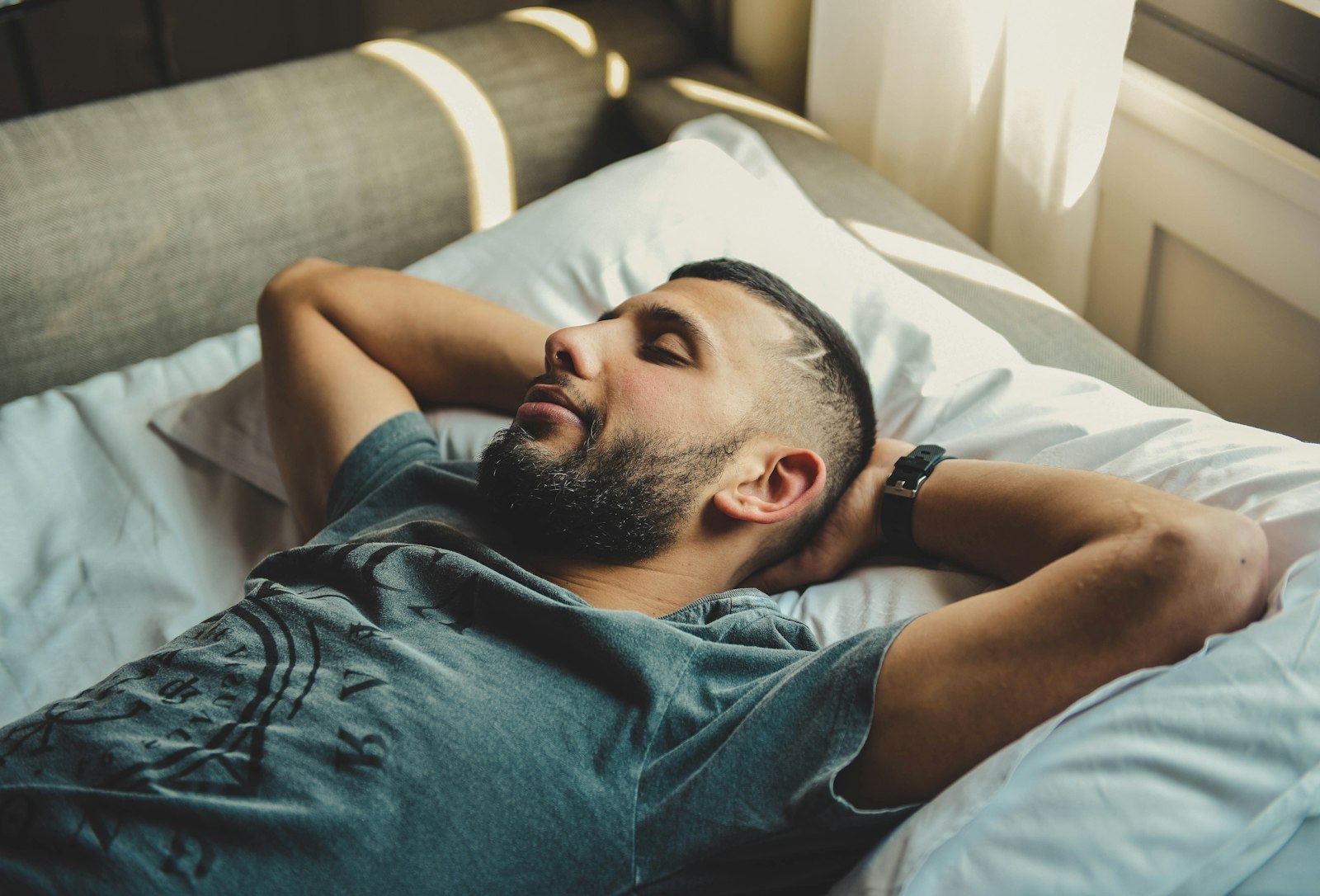
Sleep is where sermorelin's mechanism is most direct. The growth hormone pulse it amplifies is the one that normally occurs during the first slow-wave cycle of the night, and growth hormone and slow-wave sleep reinforce each other. People describe not so much falling asleep faster as staying asleep and waking rested — usually within the first month.
This matters beyond the obvious, because most of the other reported benefits of sermorelin run through sleep. Recovery, appetite regulation, mood stability, daytime energy and even body composition are all sleep-dependent. A reasonable reading of the whole evidence base is that sermorelin's most reliable effect is restoring a piece of sleep architecture, and that much of the rest follows from that.
It also means that if you already sleep deeply, you should expect less from sermorelin than someone who does not. The people who report the most are usually the people who had the most to recover.
04
Body Composition: Does Sermorelin Build Muscle or Burn Fat?
Modestly, over months, and only in partnership with training and protein. The clearest adult evidence comes from small studies in older men and women given a GHRH analogue daily for several months, which restored growth hormone and IGF-1 toward younger levels and produced measurable but modest increases in lean mass and reductions in fat.* These were not bodybuilding outcomes. They were the difference between drifting and holding.
Mechanistically, growth hormone increases lipolysis — the release of stored fat — and supports muscle protein synthesis, mostly via IGF-1. But the effect is a nudge to processes your training and diet already govern. Sermorelin does not help with weight loss in the sense a GLP-1 medication does; it does not reduce appetite or intake. What it can do is tilt the composition of the weight you carry, slowly, if the rest of the inputs are there.
Anyone promising that sermorelin builds muscle without training, or produces fat loss without a diet change, is describing injected growth hormone at supraphysiological doses — a different substance, a different risk profile, and not what sermorelin does.
05
Sermorelin Benefits for Men vs Women
The mechanism is identical and growth hormone declines on the same curve in both sexes, so the graded list above applies to everyone. What differs is emphasis. Men more often ask about sermorelin benefits for muscle, recovery and body composition; women more often about sleep, energy, skin and the metabolic drift of perimenopause. The evidence supports the sleep and energy claims equally in both, and the body-composition data — thin as it is — includes both men and women.
One caution specific to women: perimenopausal sleep disruption has several hormonal drivers, and growth hormone decline is rarely the largest. A woman considering sermorelin for sleep should have oestrogen, progesterone and thyroid looked at in the same evaluation, or she may be treating the smallest contributor first.
One caution specific to men: sermorelin does not raise testosterone. Men whose real problem is low testosterone will not fix it with a growth hormone secretagogue, and a physician who tests both before prescribing either is doing it properly.
06
Does Sermorelin Cause Cancer? The Question People Actually Search
There is no evidence that sermorelin causes cancer. There is also a legitimate reason the question exists, and it deserves a straight answer rather than reassurance.
Growth hormone and IGF-1 are growth signals. Cells that are already malignant can, in principle, respond to growth signals, which is why no responsible prescriber gives any growth hormone secretagogue to a person with an active cancer, and why a history of cancer is a reason for caution and specialist input. Sermorelin's advantage over injected growth hormone here is real: because it works through the pituitary under normal feedback, it does not push IGF-1 to the supraphysiological levels that raise theoretical concern. It restores a pulse; it does not override the system.
The evidence for harm in adults using sermorelin at physiological doses is absent — not because it has been studied exhaustively, but because it has not been studied at scale for long. That is the honest position: no signal of harm, no long-term dataset to prove its absence, and a clear rule about who should not take it. Protocol MD monitors IGF-1 so that levels stay within the normal range for age, which is the practical safeguard.
07
Is Sermorelin FDA-Approved? Its Actual Regulatory Status
Sermorelin acetate was approved by the FDA in 1997 under the brand name Geref, for diagnosing and treating growth hormone deficiency in children. Its manufacturer withdrew it from the market in 2008 for commercial reasons; the FDA did not withdraw it for safety.* No adult indication was ever approved, and none is pending.
Adult sermorelin today is prescribed off-label and compounded by 503A pharmacies against individual prescriptions. That is legal, common, and exactly the status of every sermorelin protocol in the country — including ProtocolMD's. It also means the adult evidence base was never required to reach approval standard, which is why the table above has so few rows marked strongly supported. Approval history is not a safety verdict in either direction; it is a description of what has and has not been proven.
08
Sermorelin Benefits and Side Effects, Together
- Injection-site redness, itching or a small lump — the most common effect, usually fading within the first weeks.
- Flushing, warmth or a mild headache shortly after injecting, early in treatment.
- Water retention or mild joint stiffness in some people, more likely if IGF-1 rises quickly.
- Dizziness or nausea, uncommon and usually transient.
- Hair: sermorelin has not been shown to cause hair loss, nor to grow it. Reports in either direction are anecdotal.
Because sermorelin works through the pituitary's own feedback, the serious effects associated with high-dose injected growth hormone — carpal tunnel, glucose intolerance, acromegalic changes — are rare at physiological restoration and are the reason IGF-1 is monitored. If you want the full picture, our dedicated article on sermorelin side effects covers each in depth.
09
What Happens If You Take Sermorelin Every Day?
Daily nightly injection is the standard pattern, because the pulse it amplifies is a nightly event and the molecule's half-life is short. Taken every day, sermorelin produces a steady, modestly elevated growth hormone and IGF-1 profile that plateaus over the first couple of months; it does not accumulate or escalate. Some protocols build in periodic breaks to preserve pituitary responsiveness; whether that is necessary is not settled, and it is a prescriber's decision, not a forum's.
Taken every day for months, the realistic result is the graded list above, in order: sleep, then energy and recovery, then modest body composition. Taken every day in the hope of anything faster or larger, the realistic result is disappointment.
10
Is It Worth Taking Sermorelin?
It depends entirely on what you are buying. If the benefit you want is dramatic — a visible transformation, a return to your twenties — sermorelin does not sell it and never did. If what you want is a physician-supervised, physiologically bounded nudge to a signal that has been declining, with better sleep as the likely first return and modest gains behind it, it is a reasonable thing to try, provided the fundamentals are in place and someone qualified has confirmed it suits you.
The dry truth about sermorelin benefits is that the best ones are the ones you stop noticing — sleeping through the night, recovering by the next session, having energy at four in the afternoon. They do not photograph. They do, however, compound.
11
How ProtocolMD Prescribes Sermorelin
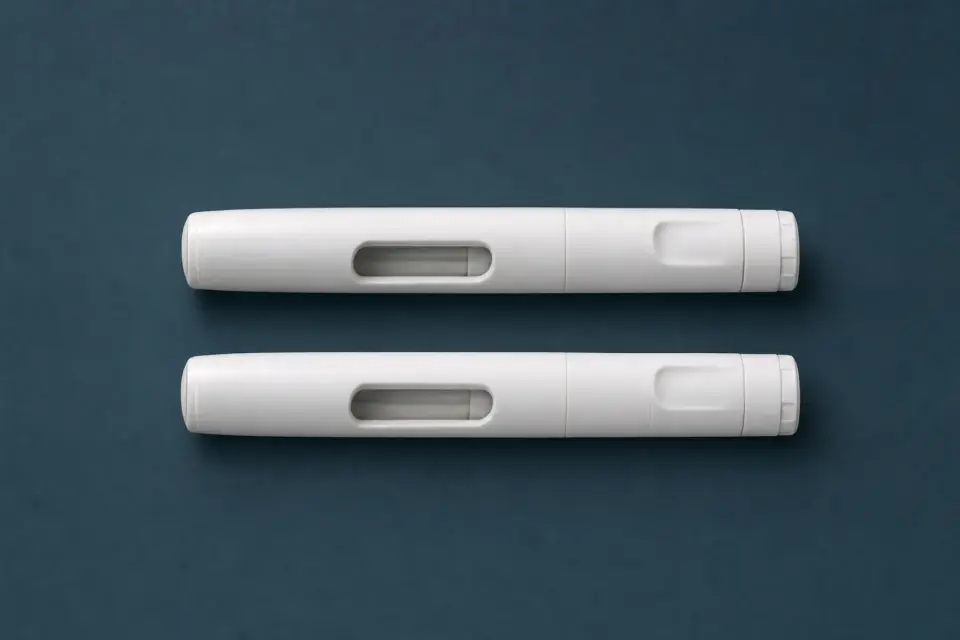
ProtocolMD's physician-prescribed sermorelin begins with a physician review of your history and goals — including whether your symptoms are better explained by low testosterone, thyroid, sleep apnoea or simple sleep debt, all of which a secretagogue will not fix. Where sermorelin is appropriate, the prescription is filled by a 503A compounding pharmacy, shipped cold-chain, and dosing is set and adjusted by the prescriber against your response and your IGF-1. We do not publish dosing figures, because a number on a blog is not a prescription.
The benefits we tell patients to expect are the ones in the top rows of the table: better sleep first, steadier energy and recovery next, and modest body-composition change over months alongside training. Everything else, we tell them, is a pleasant surprise if it happens and not something to pay for.
The honest list of sermorelin benefits is short and gradual — sleep, energy, recovery, and modest body composition — capped by your own pituitary and never guaranteed.
FAQ
Frequently Asked Questions
What are the main benefits of sermorelin?
The best-supported benefits are deeper sleep and steadier daytime energy, usually within the first one to two months. Faster recovery and modest body-composition change — less fat, lean mass retained — are plausible and supported by small studies over three to six months, provided training and protein are in place. Claims about skin, hair, cognition and libido are weakly supported.
Is it worth taking sermorelin?
For a physician-supervised, gradual nudge to a declining growth hormone signal — with sleep as the likely first return — it can be. For a dramatic transformation, no. The people happiest with sermorelin arrived with realistic expectations and judged it at six months, not six weeks.
Does sermorelin cause cancer?
There is no evidence that it does. Because growth hormone and IGF-1 are growth signals, it is not prescribed to anyone with an active cancer, and a cancer history warrants specialist input. Sermorelin's pituitary-mediated action keeps IGF-1 within physiological range, which is monitored. No long-term safety dataset exists either way.
Will sermorelin grow hair?
No evidence supports it. Growth hormone deficiency can thin hair, but restoring a modest pulse has not been shown to regrow hair. Nor has sermorelin been shown to cause hair loss. Reports in both directions are anecdotal.
What will sermorelin do to your body?
It enlarges the overnight growth hormone pulse your pituitary already produces, raising IGF-1 toward a more youthful range within your body's normal feedback. Over weeks to months that commonly means deeper sleep, steadier energy, faster recovery and modest body-composition change. It does not raise testosterone and does not produce muscle or fat loss on its own.
What happens if I take sermorelin every day?
Daily nightly injection is standard. Growth hormone and IGF-1 rise to a modest plateau over the first couple of months and stay there; sermorelin does not accumulate. Whether to include periodic breaks is a prescriber's decision. The result over months is the graded benefit list — sleep first, then energy and recovery, then modest body composition.
Does sermorelin build muscle?
Modestly, and only with resistance training and adequate protein. Small studies in older adults showed modest lean-mass gains over several months. It is not comparable to anabolic steroids or high-dose injected growth hormone, and it does not build muscle without training.
Are sermorelin benefits different for women?
The mechanism and timeline are the same. Women more often report sleep, energy and skin changes than muscle. Because perimenopausal sleep disruption has several hormonal drivers, sermorelin should be evaluated alongside oestrogen, progesterone and thyroid rather than instead of them.
Citations & Sources
- Age-related decline in growth hormone secretion ("somatopause"): Veldhuis JD, et al. Aging and hormones of the hypothalamo-pituitary axis. Endocr Rev. 2005. https://pubmed.ncbi.nlm.nih.gov/?term=veldhuis+aging+growth+hormone+secretion+review
- GHRH(1-29) in older adults restoring GH/IGF-1 with modest body-composition change: Corpas E, et al. J Clin Endocrinol Metab. 1992; Khorram O, et al. Effects of [norleucine27]GHRH(1-29)-NH2 administration on the immune system of aging men and women. J Clin Endocrinol Metab. 1997; Walker RF. Sermorelin: a better approach to management of adult-onset growth hormone insufficiency? Clin Interv Aging. 2006. https://pmc.ncbi.nlm.nih.gov/articles/PMC2699646/
- Sermorelin acetate (Geref): FDA approval 1997 for paediatric GH deficiency; discontinued 2008 for commercial reasons. Drugs@FDA: https://www.accessdata.fda.gov/scripts/cder/daf/index.cfm?event=BasicSearch.process&searchterm=geref
Medically reviewed by Dr. Richard Dentico, MD. Educational only — this article does not diagnose, prevent, treat, or cure any condition and is not medical advice. The benefits described are commonly reported patterns and findings from small studies, graded here by the strength of that evidence; they are not guarantees and individual results vary. Sermorelin has no FDA-approved indication in adults and is prescribed off-label; ProtocolMD's sermorelin is physician-prescribed and compounded by a 503A pharmacy, and compounded medications are not FDA-approved. ProtocolMD sells sermorelin and therefore has a commercial interest in this topic. Sermorelin is not appropriate for anyone with an active malignancy. Do not start, stop, or change any medication without your prescribing physician.
Medically reviewed by Dr. Richard Dentico, MD. Published September 17, 2026.
Take the assessment