%20scale(0.008000%20-0.008000)'%3e%3cpath%20d='M74%20714H250L447%20155H449L641%20714H815V0H696V551H694L496%200H393L195%20551H193V0H74Z'/%3e%3c/g%3e%3cg%20transform='translate(114.2240%2035.7)%20scale(0.008000%20-0.008000)'%3e%3cpath%20d='M76%20714H372Q454%20714%20514.0%20686.0Q574%20658%20612.0%20609.5Q650%20561%20668.5%20496.0Q687%20431%20687%20357Q687%20283%20668.5%20218.0Q650%20153%20612.0%20104.5Q574%2056%20514.0%2028.0Q454%200%20372%200H76ZM201%20102H324Q397%20102%20443.5%20121.5Q490%20141%20516.5%20175.5Q543%20210%20552.5%20256.5Q562%20303%20562%20357Q562%20411%20552.5%20457.5Q543%20504%20516.5%20538.5Q490%20573%20443.5%20592.5Q397%20612%20324%20612H201Z'/%3e%3c/g%3e%3c/g%3e%3c/svg%3e)

Key takeaways
- The smell is hydrogen sulfide, a gas gut bacteria produce from sulfur-containing amino acids in protein.
- Slowed digestion is the enabling condition — food sits longer, so there's more time to ferment.
- Whey protein is the most overlooked trigger, and it's the thing most people add when they start a GLP-1.
- Sulfur burps with vomiting, severe pain, or no stool and no gas is a different situation and needs prompt assessment.
01
What Sulfur Burps Are
A burp is gas leaving the stomach. What makes one smell of rotten eggs is hydrogen sulfide, produced when bacteria in your digestive tract break down sulfur-containing compounds.
The main raw material is protein. Two amino acids in particular — cysteine and methionine — contain sulfur, and when gut bacteria ferment them, hydrogen sulfide is among the products. The smell is distinctive and considerably more unpleasant than ordinary gas, which is why people go looking for an explanation rather than ignoring it.
None of this is unique to GLP-1 medications. It happens with digestive slowdowns generally, with certain infections, and after very high-protein or high-sulfur meals in people taking nothing at all. What GLP-1s do is create ideal conditions for it.
02
Why GLP-1 Medications Cause Them
Gastrointestinal effects were the most common side effects of semaglutide in the STEP-1 trial (Wilding et al., 2021). A 2026 Annals of Internal Medicine cohort study of adults with type 2 diabetes found similar risks of severe gastrointestinal events, such as pancreatitis, biliary disease and bowel obstruction, with dulaglutide, semaglutide, and tirzepatide (Crisafulli et al., 2026). GI effects follow the drug class, not one molecule.
For sulfur burps specifically, it comes down to time:
Food stays in the stomach longer. Slowing gastric emptying is central to how these medications produce fullness. But a stomach that empties slowly is one where food sits, and sitting food is food available to ferment.
Bacteria get a longer window. Fermentation is a function of substrate and time. Give gut bacteria the same protein for longer and more gas gets produced, hydrogen sulfide included.
The diet changed at the same moment. Most people don't only start a medication — they overhaul what they eat, usually toward more protein. More sulfur-containing amino acids arriving into a slower-moving gut is the combination that produces the symptom.
An honest note on the evidence
The honest caveat: sulfur burps have not been specifically characterized in the published literature for this drug class. Belching is documented as an adverse effect, and delayed gastric emptying is thoroughly established, but the specific chain — GLP-1, to slowed transit, to hydrogen sulfide production, to sulfurous belching — is a reasonable inference from known physiology rather than a measured finding.
That doesn't make it wrong. It's the most plausible explanation, it fits what people report, and it fits what relieves it. But there's a difference between a mechanism that has been demonstrated and one that has been reasoned out, and anyone stating this one with complete confidence has gone past what's actually been shown.
03
Does It Matter Which Medication You're On?
Not really, and this is worth stating plainly because many people know their medication only by its brand name.
| Medication | Active ingredient |
|---|---|
| Ozempic, Wegovy | Semaglutide |
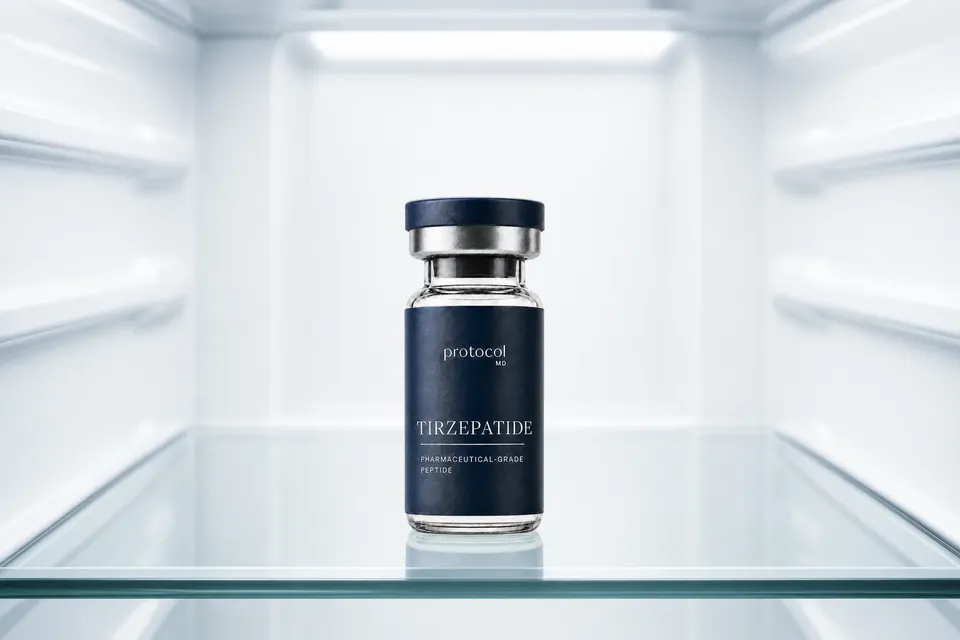
| Mounjaro, Zepbound | Tirzepatide |
| Compounded semaglutide or tirzepatide | The same two molecules, prepared by a compounding pharmacy |
All of them slow gastric emptying. All of them can produce this symptom, and the mechanism and the practical response are the same in every case. Some patients report it more often on tirzepatide-based medications than semaglutide-based ones, but sulfur burps specifically have not been studied, and the 2026 Annals of Internal Medicine comparison found no significant difference in severe gastrointestinal events between tirzepatide and semaglutide. It shouldn't drive any decision on its own.
If you're on a compounded version, one thing is worth knowing: compounded medications are not FDA-approved and are not the same products as the brand-name versions, and formulations can include additional ingredients. If your symptoms started with a new pharmacy or a new formulation rather than with the medication itself, that's worth raising with your prescriber.
04
The Protein Shake Nobody Mentions
This is the connection worth the whole article.
Everyone starting a GLP-1 is told to prioritize protein — including by us, repeatedly. Adequate protein helps protect muscle while you lose weight, and it is one of the most important dietary levers on these medications. We argue that in how much you should actually be eating on a GLP-1 and in body recomposition, and we stand behind it.
The most common way people act on that advice is a whey protein shake.
Whey is rich in cysteine and methionine — precisely the sulfur-containing amino acids gut bacteria convert into hydrogen sulfide. So the sequence plays out constantly: start the medication, digestion slows, add a daily whey shake on good advice, and develop sulfur burps that appear to come from nowhere.
If your burps started around the same time as a new protein supplement, look there first, well before concluding something is wrong with the medication.
How to fix it without abandoning your protein target:
- Try whey isolate instead of concentrate. Isolate is more processed and lower in lactose, which is a separate fermentable substrate, and many people tolerate it noticeably better.
- Try a plant-based protein. Pea and rice proteins have a different amino acid profile. Some people do better; a minority do worse. Worth a two-week trial.
- Spread protein through the day rather than taking a large load at once. A slow stomach handles a big protein bolus poorly, whether it's a shake or a steak.
- Shift toward whole foods if shakes are the specific trigger — though note eggs and red meat are also high in sulfur amino acids.
- Don't solve it by cutting protein. This matters most. Dropping your protein intake to stop the burping trades a social nuisance for muscle loss, which is a far worse outcome and one you won't notice for months.
05
What Foods Cause Sulfur Burps
Beyond protein supplements, the usual suspects:
- Eggs — among the highest sulfur-amino-acid foods there is
- Red meat
- Dairy, both for its protein and its lactose
- Garlic and onions, which carry their own sulfur compounds
- Cruciferous vegetables — broccoli, cabbage, cauliflower, Brussels sprouts
- Carbonated drinks, which add swallowed gas to the equation
- Sugar alcohols and artificial sweeteners, common in protein bars and "diet" products and highly fermentable
- Alcohol, which irritates the gut and slows things further
None of these need eliminating permanently. The exercise is finding which one is yours — usually by removing the single most likely candidate for a week or two and watching what changes.
06
How to Get Rid of Sulfur Burps
There's no instant fix, and pages promising one are overselling. What follows are general measures, not a treatment plan, and none replace your physician's advice.
Change one thing at a time. The most common mistake is cutting eggs, dairy, garlic, cruciferous vegetables, and the protein shake all at once. That may stop the burps, but you learn nothing and end up on a needlessly restricted diet. One change, one to two weeks, then assess.
Start with the protein supplement if you added one. It's the highest-yield single change for most people on a GLP-1.
Eat smaller, more frequent meals. Less food sitting at once means less material fermenting at once.
Eat slowly and avoid swallowing air. Talking while eating, drinking through straws, and chewing gum all add gas that has to go somewhere.
Stay well hydrated. This supports normal digestion generally, and it matters more if diarrhea is in the picture.
Skip carbonated drinks while you're sorting it out.
Stay upright after eating rather than lying down.
Give it time. For most people this eases as the body adapts to a given dose.
Ask before taking anything for it. People use various over-the-counter products for gas and digestive symptoms. Whether any is appropriate for you depends on your history, your other medications, and what's actually causing this — and this is a medication that already alters gut motility. That's a conversation with your physician or pharmacist, not a decision to make from an article.
07
Sulfur Burps and Diarrhea Together
This combination is one of the most searched versions of the question, and it deserves more than a passing mention.
The two often travel together for the same underlying reason: disrupted gut motility and altered fermentation. Semaglutide and tirzepatide can both cause diarrhea through changes in transit and in how the body handles fat and bile, and the same slowed-then-disordered digestion that produces sulfurous gas can produce loose stools.
Two things to hold onto:
First, dehydration is the real risk in that combination. Diarrhea while appetite suppression already has you drinking less depletes fluid and electrolytes faster than people expect. That's covered properly in our diarrhea guide, and it's the reason this pairing deserves attention rather than tolerance.
Second, this specific combination is the one most worth not assuming is your medication. Which brings us to the next section.
08
When It Might Not Be the Medication
A page that tells you every symptom is your GLP-1 is worse medicine than one that tells you when to look elsewhere.
Sulfur burps — particularly with diarrhea, cramping, or a sudden onset — have causes that have nothing to do with weight-loss medication, and some are treatable once identified. Things a physician may consider include:
- Giardia, a parasitic infection that causes diarrhea, gas, and stomach cramps
- H. pylori, a bacterial stomach infection
- Viral gastroenteritis — an ordinary stomach bug
- Food poisoning
- Small intestinal bacterial overgrowth
- Gallbladder problems, including after gallbladder removal
- Reflux or irritable bowel syndrome
The pattern that should make you suspicious: symptoms that began suddenly rather than gradually, that arrived long after you'd been stable on your dose, that came with fever, or that are getting worse rather than settling. Medication side effects usually appear when you start or increase a dose and improve with time. Something that shows up out of nowhere in month eight is behaving differently.
None of this is for you to diagnose or treat yourself, and none of these are reasons to stop your medication on your own. They're reasons to describe the timeline accurately to your physician rather than assuming the answer.
09
How Long They Last
For most people this is early-phase. It tends to be worst in the first weeks and around dose increases — the same pattern as nausea — and commonly settles as the body adjusts.
Sulfur burps that persist for weeks without improving, that worsen at a stable dose, or that come with the symptoms below are worth raising with your prescriber rather than continuing to troubleshoot alone.
10
When It Isn't Just Sulfur Burps
Sulfur burps by themselves are unpleasant, not dangerous. What matters is what comes with them.
Contact your physician promptly, or seek urgent care, if you have:
- Persistent vomiting, or an inability to keep fluids down
- Severe or worsening abdominal pain
- A visibly swollen or distended abdomen
- No bowel movement and no passing of gas at all
- Blood in your stool, or black tarry stools
- Fever alongside the digestive symptoms
- Signs of dehydration — dizziness on standing, dark or scant urine, confusion, a racing heartbeat
Because this class slows gut motility, a small number of people develop more serious gastrointestinal problems, and the symptoms above can indicate obstruction or ileus. Those are assessed in person, not managed at home. We cover the same ground in our guide to semaglutide and constipation, because the underlying concern is identical.
Vomiting deserves particular mention, because burps and vomiting often come together. Repeated vomiting is not a normal part of tolerating a GLP-1, and it should be reported rather than endured.
11
What to Ask Your Physician
- Is this expected at my stage of treatment?
- Could my protein supplement be the trigger, and what would you suggest instead?
- My symptoms started suddenly — is it worth ruling out an infection?
- Is there anything over the counter that's appropriate for me specifically?
- Am I getting enough protein overall, given what I've cut out?
- What symptoms should make me call you right away?
12
How Protocol MD Approaches This
Protocol MD's semaglutide and tirzepatide are physician-prescribed and compounded. Compounded medications are not FDA-approved and are not the same as the brand-name products. Semaglutide and tirzepatide carry a boxed warning about thyroid C-cell tumors and are not used in anyone with a personal or family history of medullary thyroid carcinoma (MTC) or multiple endocrine neoplasia type 2 (MEN 2). In the Protocol MD GLP-1 program, a US-licensed physician reviews your history, decides whether treatment is appropriate, and manages it over time — including side effects like this one, which are minor clinically but genuinely affect whether people stay on treatment.
That last part matters more than it sounds. Symptoms that are mostly embarrassing tend not to get reported, and problems that don't get reported don't get solved. A side effect you'd rather not bring up is still worth bringing up.
If you're already on a GLP-1, our guides on nausea, constipation, diarrhea, and how much you should actually be eating cover what comes up most alongside this. If you're considering treatment, it starts with a physician evaluation.
13
The Bottom Line
Sulfur burps on a GLP-1 come from a slow stomach and sulfur-rich protein meeting in the same place: food sits longer, bacteria ferment the sulfur-containing amino acids in it, and hydrogen sulfide is what you end up tasting. It happens on Ozempic, Wegovy, Zepbound, Mounjaro, and compounded versions alike, because the cause is the drug class rather than the brand. It's usually early, usually temporary, and usually traceable to something specific — most often the whey protein shake added the same month treatment started. Change the form of your protein rather than the amount, work through triggers one at a time, and give it a few weeks. Two exceptions: symptoms that begin suddenly long after you were stable may not be the medication at all, and sulfur burps with persistent vomiting, severe pain, or no stool and no gas are a reason to be seen now.
FAQ
Frequently Asked Questions
What causes sulfur burps?
The rotten-egg smell is hydrogen sulfide, produced when gut bacteria ferment sulfur-containing amino acids — mainly cysteine and methionine, which are abundant in protein. Anything that slows digestion gives bacteria more time to do this, which is why GLP-1 medications are a common trigger. Infections such as giardia and H. pylori, gallbladder problems, and ordinary stomach bugs can also cause them.
How do you get rid of sulfur burps?
Identify the trigger rather than chasing the symptom. Smaller and more frequent meals, reviewing any protein supplement you've recently added, reducing high-sulfur foods one at a time, limiting carbonated drinks, and staying upright after eating are the general measures. Ask your physician or pharmacist before taking anything over the counter. There is no instant fix: the gas has already been produced, and what works operates over the next few days by changing what is fermenting and how much sits in your stomach at once.
Does Ozempic cause sulfur burps? What about Wegovy, Zepbound, or Mounjaro?
All of them can. Ozempic and Wegovy are semaglutide; Mounjaro and Zepbound are tirzepatide; compounded versions use the same two molecules. The mechanism is a property of the drug class, so the cause and the response are the same regardless of which one you were prescribed.
Why do I have sulfur burps and diarrhea together?
They share a cause — disrupted gut motility and altered fermentation — so they often appear together on a GLP-1. That said, infections such as giardia can also cause diarrhea with gas and cramping, so a sudden onset or symptoms with fever is worth having assessed rather than assumed.
How long do sulfur burps last on a GLP-1?
Usually they're an early-phase issue, most noticeable in the first weeks and after dose increases, settling as your body adjusts. Symptoms that persist for weeks, worsen at a stable dose, or come with severe pain or vomiting should be discussed with your prescribing physician.
Can protein shakes cause sulfur burps?
They're a frequent and under-recognized trigger. Whey is high in exactly the sulfur-containing amino acids involved, and it's the most common thing people add when starting a GLP-1. Try whey isolate or a plant-based protein, and spread intake across the day — but don't fix the burps by cutting your protein target, because protecting muscle matters more.
Are sulfur burps dangerous?
On their own, no. The combinations that matter are sulfur burps with persistent vomiting, severe abdominal pain, a distended abdomen, blood in the stool, fever, or no stool and no gas at all — those need prompt in-person assessment.
Do sulfur burps mean the medication is working?
No. There's no established relationship between this side effect and how well the medication is working, and you shouldn't read anything into having them or not.
Citations & Sources
- Wilding JPH, et al. Once-Weekly Semaglutide in Adults with Overweight or Obesity (STEP-1). N Engl J Med. 2021. PMID 33567185. https://pubmed.ncbi.nlm.nih.gov/33567185/
- Crisafulli S, et al. Comparative Gastrointestinal Safety of Dulaglutide, Semaglutide, and Tirzepatide in Adults With Type 2 Diabetes. Ann Intern Med. 2026;179(1):1-11. https://pubmed.ncbi.nlm.nih.gov/41183330/
- MedlinePlus (National Library of Medicine). Gas — flatulence. https://medlineplus.gov/gas.html
- MedlinePlus (National Library of Medicine). Giardia Infections. https://medlineplus.gov/giardiainfections.html
Educational only — this article does not diagnose, prevent, treat, or cure any condition and is not medical advice or a recommendation of any specific product or remedy. The mechanism described is an inference from established physiology; sulfur burps have not been specifically characterized in the published literature for this drug class. The conditions named as alternative causes are examples of what a clinician may consider and are not a basis for self-diagnosis. Do not start, stop, or change the dose of any medication without your prescribing physician. Seek prompt medical attention for persistent vomiting, severe abdominal pain, abdominal distension, blood in the stool, fever, or an inability to pass stool or gas. Brand names are used only to identify the medications readers may be taking and do not imply any affiliation. Protocol MD's semaglutide and tirzepatide are physician-prescribed and compounded; compounded medications are not FDA-approved and are not the same as the brand-name products. GLP-1 medications are available only by prescription following evaluation by a licensed physician, are not appropriate for everyone, and can cause side effects; individual results vary.
Published August 10, 2026. Last updated October 2, 2026.