%20scale(0.008000%20-0.008000)'%3e%3cpath%20d='M74%20714H250L447%20155H449L641%20714H815V0H696V551H694L496%200H393L195%20551H193V0H74Z'/%3e%3c/g%3e%3cg%20transform='translate(114.2240%2035.7)%20scale(0.008000%20-0.008000)'%3e%3cpath%20d='M76%20714H372Q454%20714%20514.0%20686.0Q574%20658%20612.0%20609.5Q650%20561%20668.5%20496.0Q687%20431%20687%20357Q687%20283%20668.5%20218.0Q650%20153%20612.0%20104.5Q574%2056%20514.0%2028.0Q454%200%20372%200H76ZM201%20102H324Q397%20102%20443.5%20121.5Q490%20141%20516.5%20175.5Q543%20210%20552.5%20256.5Q562%20303%20562%20357Q562%20411%20552.5%20457.5Q543%20504%20516.5%20538.5Q490%20573%20443.5%20592.5Q397%20612%20324%20612H201Z'/%3e%3c/g%3e%3c/g%3e%3c/svg%3e)
Key takeaways
- Different molecules. Zepbound is tirzepatide, a dual agonist; Wegovy is semaglutide, a single-receptor agonist.
- Tirzepatide has shown greater average weight loss, though both are effective and individual results vary widely.
- The approvals differ, and for some people that's the deciding factor rather than the numbers.
- Both are also available compounded, which is a different decision with its own trade-offs.
01
The Short Comparison
| Zepbound | Wegovy | |
|---|---|---|
| Active ingredient | Tirzepatide | Semaglutide |
| How it works | Activates two receptors (GIP and GLP-1) | Activates one (GLP-1) |
| Approved for | Chronic weight management; obstructive sleep apnea in adults with obesity | Chronic weight management; reducing cardiovascular events in certain adults with cardiovascular disease |
| Form | Injection | Injection, and an oral form |
| Dosing | Weekly | Weekly |
| Made by | Eli Lilly | Novo Nordisk |
| Compounded version exists | Yes (tirzepatide) | Yes (semaglutide) |
This article compares the two products — approvals, evidence, cost, and access. If you want the underlying pharmacology, our guide to tirzepatide vs semaglutide covers how the molecules differ and why.
02
Same Family, Genuinely Different Drugs
Both belong to the incretin class, but they aren't variations of the same thing.
Wegovy (semaglutide) activates the GLP-1 receptor. That slows gastric emptying and acts on appetite regulation in the brain.
Zepbound (tirzepatide) activates the GLP-1 receptor and the GIP receptor. The dual mechanism is the main structural argument for why it tends to produce larger reductions.
That's the substance of the mechanical difference. Everything that follows is what it means in practice.
03
What the Evidence Shows
Each drug's pivotal obesity trial tested it against placebo, in populations that weren't identical. Semaglutide's pivotal obesity trial reported mean weight reduction of about 15% over 68 weeks (Wilding et al., 2021). Tirzepatide's reported up to roughly 21% at the highest dose over 72 weeks (Jastreboff et al., 2022).
Putting those two numbers side by side is a cross-trial comparison, which is not the same as a head-to-head result. Different participants, different durations, different protocols.
One trial did compare them directly. SURMOUNT-5, an open-label trial funded by Eli Lilly, randomized 751 adults with obesity but without type 2 diabetes to the maximum tolerated dose of tirzepatide or semaglutide for 72 weeks:
- Average weight change was −20.2% with tirzepatide and −13.7% with semaglutide, and the most common side effects in both groups were gastrointestinal, mostly mild to moderate and concentrated in dose escalation (Aronne et al., 2025).
A network meta-analysis adds the wider picture by linking many placebo-controlled trials through their shared comparators. Two recent ones are relevant:
- A living systematic review and network meta-analysis conducted for the American College of Physicians found that semaglutide and tirzepatide produced the greatest weight loss of the drugs studied, and noted that direct head-to-head comparisons were limited (Damen et al., 2026).
- A network meta-analysis of 127 trials of GLP-1 receptor and dual agonists found that, in adults with type 2 diabetes, tirzepatide reduced weight about 5 percentage points more than injectable semaglutide (Vienghirun et al., 2026).
Taken together, tirzepatide produces more average weight loss than semaglutide. The head-to-head trial is the strongest single piece of evidence for that conclusion.
Two caveats that matter more than the ranking:
Averages hide enormous individual variation. A drug that performs better on average is not the drug that will perform better for you. Some people respond strongly to semaglutide and poorly to tirzepatide.
Tolerability decides outcomes too. The medication you can actually stay on beats the one that theoretically works better. Both carry a substantial gastrointestinal burden.
04
The Approvals Are the Real Differentiator
This is the part that decides the answer for whole groups of people.
Zepbound is approved for obstructive sleep apnea in adults with obesity, in addition to chronic weight management. If you have moderate-to-severe OSA, that's a meaningful distinction — it can change what a physician recommends and what insurance will cover.
Wegovy is approved for reducing the risk of cardiovascular events in certain adults with established cardiovascular disease and overweight or obesity, alongside chronic weight management. If you have cardiovascular disease, that indication may matter more than a few percentage points of average weight loss.
So the honest framing isn't "which is better." It's: do you have a condition that one of them is specifically approved to treat? If yes, that usually settles it. If no, the decision moves to tolerability, cost, and access.
Wegovy also comes in an oral form, which matters if injections are a genuine obstacle for you.
05
Side Effects
Both share the same profile, because both act on the same core pathway. The most common effects are gastrointestinal — nausea, diarrhea, constipation, vomiting, and reduced appetite — worst when starting and after each dose increase, easing at a stable dose.
Both carry a boxed warning for thyroid C-cell tumors based on rodent studies, and neither should be used by anyone with a personal or family history of medullary thyroid carcinoma or MEN 2. Both carry risks of pancreatitis, gallbladder problems, and severe dehydration from prolonged GI symptoms.
A 2026 network meta-analysis reported nausea and vomiting more often with tirzepatide (Vienghirun et al., 2026), while in the SURMOUNT-5 head-to-head trial gastrointestinal effects were the most common side effects in both groups (Aronne et al., 2025). Neither finding should drive a decision on its own. Our guide to tirzepatide side effects covers the full picture, and it applies to Zepbound directly.
06
Cost and Access
For most people this is the actual deciding factor, and it's where the comparison stops being about pharmacology.
Both brand products carry list prices well over a thousand dollars a month. Few people pay that, but what you actually pay varies enormously.
Insurance coverage is the biggest single variable, and many plans exclude weight-loss medications as a category. Where a plan does cover one, it often covers only one — which means your formulary may decide this for you regardless of which you'd prefer.
Both manufacturers run savings programs and direct cash-pay options, and both have changed terms repeatedly. Check current terms directly rather than trusting any article, including this one.
The approvals interact with coverage. If you have obstructive sleep apnea or established cardiovascular disease, the relevant approval may be what unlocks coverage — another reason the indications matter more than the effectiveness ranking.
07
What Starting Either One Actually Looks Like
How either drug starts surprises people more than any difference between the two.
Neither one starts at its full dose. Both are escalated gradually over months, stepping up at intervals so the body can adapt. That means:
- The dose that produced the trial results is not the dose you begin on. The headline figures come from people who reached and stayed at higher doses over a year or more.
- Every step up tends to bring a fresh wave of side effects, which then settles. People frequently interpret that as the drug getting worse when it's the ramp repeating.
- Judging either medication in the first month is judging the titration, not the treatment.
- Escalation pace is adjustable. If each step is rough, that's a real conversation with your prescriber rather than a reason to switch drugs or quit.
This matters for the comparison because people often abandon one medication during escalation and conclude the other would have been better. Frequently the difference was the pace, not the molecule.
08
When Coverage Is Denied
For most people this is the actual outcome, so it deserves more than a sentence.
Denial is common and it isn't the end of the process. Plans that exclude weight-loss medications as a category will refuse both. Plans that cover them often require prior authorisation, documented BMI thresholds, or evidence of prior attempts at weight management.
Routes worth knowing:
- Prior authorisation. Frequently the requirement rather than a rejection. Your prescriber's office usually handles it, and specific documentation is often what unlocks it.
- Appeal. Denials are appealable and appeals do succeed, particularly where a covered indication applies — which is where Zepbound's sleep apnea approval or Wegovy's cardiovascular indication can change the outcome.
- A different product on your formulary. Sometimes the answer isn't either of these two.
- Manufacturer savings and cash-pay programs, whose terms change often.
- Compounded treatment, with the trade-offs described below.
The order matters. People often jump straight from a denial to cash-pay without attempting prior authorisation or an appeal, and that skips the two routes that would have cost them nothing.
09
The Option Neither Comparison Mentions
Most comparisons of Zepbound and Wegovy stop at the two brand products. That leaves out what many people actually end up doing.
Both molecules are available in compounded form. Compounded semaglutide and compounded tirzepatide are prepared by compounding pharmacies against a prescription, and cost is the main reason people use them.
The trade-offs are real and worth stating plainly:
- Compounded medications are not FDA-approved. They haven't been through the review or the trials described above.
- They are not the same products as Wegovy or Zepbound, and formulations vary — many include additional ingredients such as B12 that the brand products don't contain.
- Quality depends entirely on the compounding pharmacy, which makes the pharmacy, its licensing, and its testing the thing to evaluate.
- The approvals above don't transfer. Compounded tirzepatide and compounded semaglutide are not FDA-approved for any use: compounded tirzepatide is not approved for sleep apnea, and compounded semaglutide is not approved for cardiovascular risk reduction. Those indications belong only to the brand products that earned them.
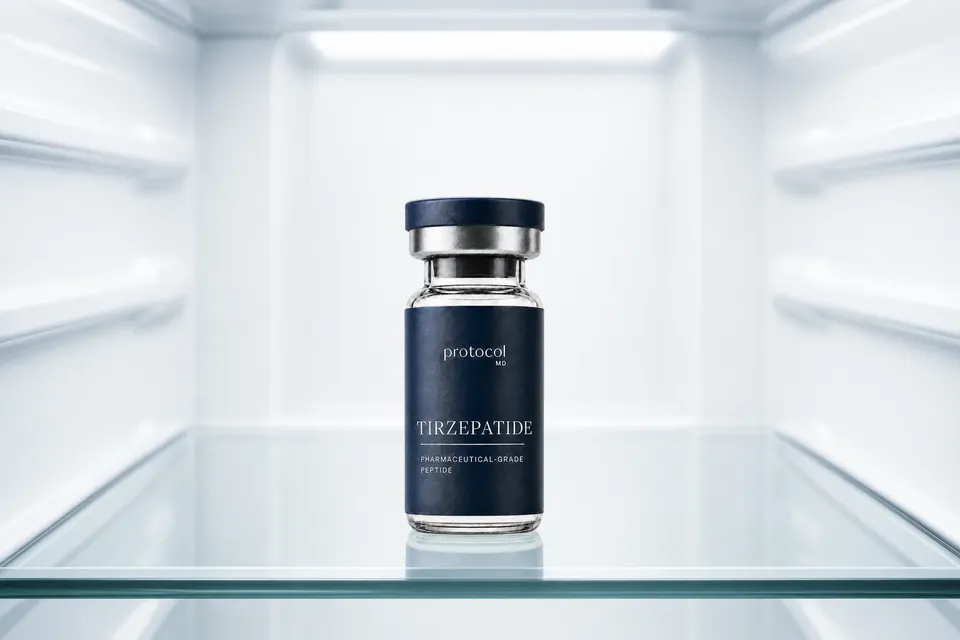
Protocol MD sells compounded semaglutide and compounded tirzepatide. We're stating that here rather than at the bottom, because it means you should read this section with that in mind. If you can access or afford Wegovy or Zepbound, those carry an evidence base and a set of approvals that compounded versions do not.
10
Which One Fits You?
A reasonable way to think about it:
- You have obstructive sleep apnea → Zepbound is approved for it.
- You have established cardiovascular disease → Wegovy's indication may matter more than the weight-loss ranking.
- Your insurance covers one and not the other → that's usually your answer, and arguing with a formulary rarely works.
- Injections are a genuine obstacle → Wegovy's oral form is worth discussing.
- Neither is covered and cost is the barrier → savings programs, manufacturer cash-pay options, and compounded treatment are the routes, in roughly that order of evidence strength.
- You tried one and couldn't tolerate it → switching is reasonable, but they share a mechanism, so discuss dose and pace with your prescriber before assuming the class is out.
11
What to Ask Your Physician
- Given my health history, is one of these specifically indicated for me?
- Which does my insurance actually cover, and what's the process if it's denied?
- If cost is the barrier, what are my realistic options?
- I couldn't tolerate one — is switching likely to help, or is it the class?
- What should we monitor once I start?
12
How Protocol MD Approaches This
Protocol MD's semaglutide and tirzepatide are physician-prescribed and compounded. Compounded medications are not FDA-approved and are not the same as the brand-name products. In the Protocol MD GLP-1 program, a US-licensed physician reviews your history, decides whether treatment is appropriate, and manages it over time.
We don't sell Wegovy or Zepbound, and if one of them is the right answer for you — because of an indication you have or coverage you can access — that's the better-evidenced route and we'd rather say so than pretend otherwise.
If you're considering treatment, it starts with a physician evaluation. Our comparison of the underlying molecules covers the pharmacology in more depth.
13
The Bottom Line
Zepbound is tirzepatide, Wegovy is semaglutide, and on average tirzepatide has produced more weight loss — a conclusion supported by a head-to-head trial and by network meta-analyses, not just by putting two trial numbers next to each other. But that ranking is the least useful thing about the comparison for most individual people. What usually decides it is whether you have a condition one of them is specifically approved to treat, which one your insurance will actually pay for, and which one you can tolerate well enough to stay on. Compounded versions of both molecules exist and are what many people end up using on cost grounds, with the trade-off that they aren't FDA-approved and don't carry those approvals. Work through the indications and the coverage first — the effectiveness question usually turns out to be the easy part.
FAQ
Frequently Asked Questions
Is Zepbound or Wegovy better for weight loss?
Tirzepatide has produced greater average weight reduction. In the SURMOUNT-5 head-to-head trial, average weight change over 72 weeks was about −20% with tirzepatide and −14% with semaglutide. But those are averages across trials with wide individual variation, and the medication you tolerate and can actually access matters more than a ranking.
What's the difference between Zepbound and Wegovy?
Zepbound is tirzepatide and activates two receptors; Wegovy is semaglutide and activates one. They're approved for different additional conditions — Zepbound for obstructive sleep apnea, Wegovy for reducing cardiovascular events in certain patients — and Wegovy also comes in an oral form.
Which is cheaper, Zepbound or Wegovy?
Both carry list prices above a thousand dollars a month, and what you actually pay depends on insurance, savings programs, and cash-pay options that change frequently. Neither is reliably cheaper; check current terms for both.
Can you switch from Wegovy to Zepbound?
People do, often when weight loss stalls or one isn't tolerated. Doses don't map one to one and you'd typically restart at a lower dose and escalate again, so it's a prescriber decision rather than a swap.
Do Zepbound and Wegovy have the same side effects?
Largely yes, because they act on the same core pathway — mostly gastrointestinal, worst at the start and after dose increases. Both carry a boxed warning for thyroid C-cell tumors. Some evidence suggests tirzepatide causes GI effects somewhat more often.
Is Zepbound the same as Mounjaro?
Both are tirzepatide from the same manufacturer. Mounjaro is approved for type 2 diabetes and Zepbound for weight management and obstructive sleep apnea. Same molecule, different approved uses.
Is Wegovy the same as Ozempic?
Both are semaglutide from the same manufacturer. Ozempic is approved for type 2 diabetes, Wegovy for chronic weight management and cardiovascular risk reduction in certain patients.
What about compounded versions?
Both molecules are available compounded, typically at lower cost. Compounded medications are not FDA-approved, are not the same products as Wegovy or Zepbound, and the brand approvals don't transfer to them. Quality depends on the compounding pharmacy.
Citations & Sources
- Damen JAA, et al. Benefits and Harms of Pharmacologic Treatments in Adults With Overweight or Obesity: A Living Systematic Review and Network Meta-analysis for the American College of Physicians. Ann Intern Med. 2026 Aug. https://pubmed.ncbi.nlm.nih.gov/42296503/
- Vienghirun J, et al. GLP-1 Receptor/Dual Agonists for Weight Loss: A Systematic Review and Network Meta-Analysis of RCTs. Diabetes Obes Metab. 2026 Jun. https://pubmed.ncbi.nlm.nih.gov/41872986/
- Jastreboff AM, et al. Tirzepatide Once Weekly for the Treatment of Obesity (SURMOUNT-1). N Engl J Med. 2022. https://pubmed.ncbi.nlm.nih.gov/35658024/
- Wilding JPH, et al. Once-Weekly Semaglutide in Adults with Overweight or Obesity (STEP-1). N Engl J Med. 2021. https://pubmed.ncbi.nlm.nih.gov/33567185/
- Aronne LJ, et al. Tirzepatide as Compared with Semaglutide for the Treatment of Obesity (SURMOUNT-5). N Engl J Med. 2025. PMID 40353578. https://pubmed.ncbi.nlm.nih.gov/40353578/
Educational only — this article does not diagnose, prevent, treat, or cure any condition and is not medical advice or a recommendation of any specific medication. Weight-loss figures cited are outcomes from named published clinical trials and analyses; they are averages with wide individual variation and are not predictions. Approved indications, pricing, and coverage change over time, so check current details with your physician, pharmacy and insurer. Protocol MD sells compounded semaglutide and compounded tirzepatide and therefore has a commercial interest in this topic; we do not sell Wegovy, Zepbound, Ozempic, or Mounjaro, and brand names are used only to identify medications and do not imply any affiliation or endorsement. Compounded medications are not FDA-approved, are not the same as the brand-name products, and the approvals held by brand products do not apply to them. Both medications carry a boxed warning for thyroid C-cell tumors and are contraindicated in people with a personal or family history of medullary thyroid carcinoma or MEN 2. Do not start, stop, or switch any medication without your prescribing physician.
Published August 20, 2026. Last updated October 7, 2026.